ACMH Twitter ACMH Facebook ACMH YouTube
  • About
  • News
  • Events
  • Blog
Login Log Out

ACMH

ACMH

Phone: 517 372-4016

Parent Line: (888) ACMH-KID (226-4543)

  • Home
  • About
    • Meet the ACMH Staff
    • ACMH Board of Directors
    • ACMH Job Opportunities
    • ACMH Annual Reports
  • Get Help
    • Accessing Mental Health Services For My Child
    • Understanding my Child’s Mental Health Challenges
    • Collaborating with the Professionals Working with My Family
    • Supporting Student Mental Health
    • Navigating
      • Problems at School
      • Navigating the Juvenile Justice System
      • Navigating the Child Welfare System
      • The Mental Health System
    • Finding Resources for Housing, Employment, Childcare, Healthcare and Other Family Supports such as SSI/SSDI
      • Housing
      • Employment
      • Childcare
      • Free or Low Cost Medications
      • Health Care Coverage
    • Military Family Support
    • Frequently Asked Questions
  • Get Information
    • Children’s Mental Health 101
      • I Am Worried About My Child’s Mental Health
      • Possible Red Flags
      • Who can help
      • How to Access Mental Health Services and Supports
      • I Just Found Out My Child Has a Mental Health Disorder
      • Common Diagnosis
      • Treatments & Supports
      • Questions to Ask About Treatment
      • How to be Actively Involved in Your Child’s Treatment
      • What to Expect
      • When Accessing Mental Health Services Using Public Mental Health
      • When Accessing Mental Health Services Using Private Insurance
      • What to Expect if Your Child is in Crisis
      • Mental Health by Age & Stage
      • Additional Children’s Mental Health Resources
    • Ask the Expert
    • ACMH Projects
      • Parent Support Partner
      • Youth Peer Support
      • Family Action Partnership
      • Statewide Family Network
      • Other Projects & Collaborations
    • For Community Agencies
    • Child and Family Services
      • Public Mental Health
      • Juvenile Justice
      • Child Welfare
      • Education
    • Training Opportunities & Calendar
      • ACMH Trainings
      • Community Partner Trainings
      • Youth Mental Health First Aid
      • Youth Peer Support Project
      • Webinars
      • Parent Support Partner (PSP) Training Calendar
      • ACMH Staff Portal
  • Get Support
    • Support for You
    • Family Stories
    • The Manual
    • Online Discussions
    • Find Support in Your Local Community
    • Help To Create a Local Parent Support Group
  • Get Involved
    • Family Leadership Opportunities
    • ACMH Statewide Parent Advisory Committee (PAC)
    • Your Voice Matters: Family Advocacy in Children’s Mental Health
      • Family Driven
      • Youth Guided
    • Share Your Story
    • Advocacy 101
  • Youth Page
    • Youth Blog
  • Contact

Eight MDHHS employees honored for outstanding work during Governor’s recognition event

November 14, 2019 by Leave a Comment

Eight MDHHS employees were recently recognized for their exemplary work during a special employee recognition event hosted by Gov. Gretchen Whitmer and ACMH was thrilled to see that Kim Batsche-McKenzie, Director of the Division of Mental Health Services to Children and Families, Behavioral Health and Developmental Disabilities Administration. was among those honored for her outstanding work with children and families!

The event, which was held at the Governor’s official residence in Lansing, was a chance for these employees to connect with Governor Whitmer and be recognized for their service. Director Robert Gordon joined them for the event.

Each employee was nominated for the honor by the leadership of their respective administrations. The employees are:

Jennifer Allen, senior regulation agent, Livingston County MDHHS office, Office of Inspector General.
Kim Batsche-McKenzie, director of the Division of Mental Health Services to Children and Families, Behavioral Health and Developmental Disabilities Administration.
Jeffrey Cook, district manager of the Union Street Office in Genesee County, Economic Stability Administration.
Joe Coyle, section manager for Viral Hepatitis, HAI, TB and Body Art, Public Health Administration.
Weylin Douglas, department specialist, Home and Community Based Services Section, Medical Services Administration.
Patrice Gillette, departmental analyst, Bureau of Budget, Financial Operations Administration.
Mona Guyton, Children’s Protective Services supervisor, Kent County.
Amy Hundley, deputy director of the Economic Stability Administration.
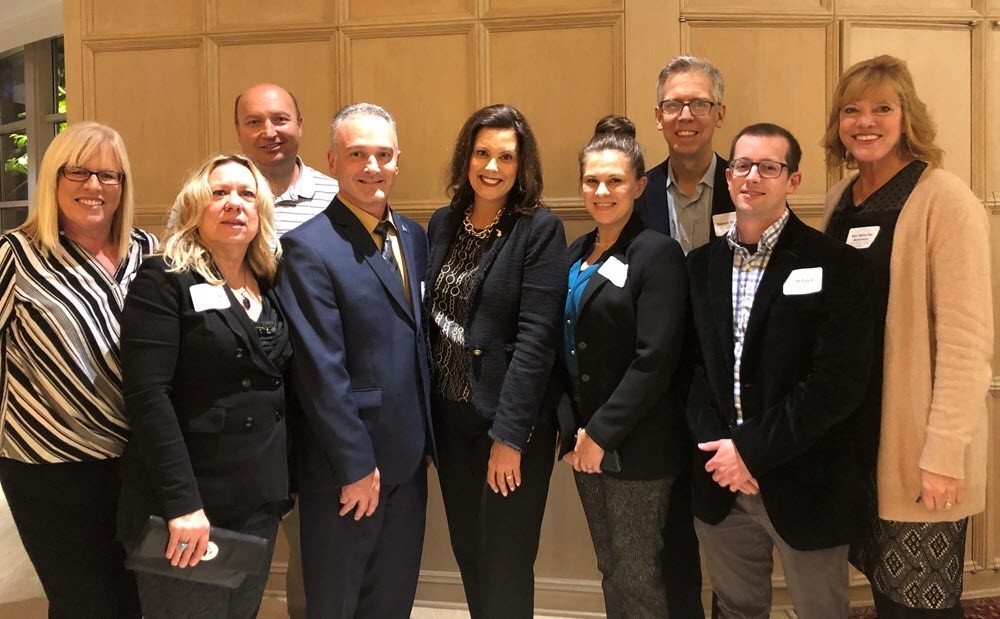
Pictured above are (from left to right): Amy Hundley, Patricia Gillette, Weylin Douglas, Jeffrey Cook, Governor Whitmer, Jennifer Allen, Director Gordon, Joe Coyle and Kim Batsche-McKenzie. Not pictured is Mona Guyton.

Filed Under: Uncategorized

Hey Michigan – Raise the Age Legislation was Just Signed into Law!

October 31, 2019 by Leave a Comment

Michigan Council on Crime and Delinquency shares that the Governor just signed Raise the Age legislation.

Learn more by viewing MICCD’s & Raise the Age’s posts below:

Gov. Gretchen Whitmer just signed legislation increasing the jurisdiction of juvenile court to age 18!

We are celebrating this monumental milestone in justice reform for Michigan youth! By increasing the age of juvenile court jurisdiction, 17-year-olds will no longer be automatically treated as adults for every offense. More children, youth and young adults will be able to get age-appropriate treatment that involves their families, which will, in turn, increase their chances for success. These changes will help reduce crime, recidivism, and taxpayer costs. It is a huge win.

The new legislation also:Requires youth under age 18 in adult jails to be housed separately from adults; Prohibits transportation of youth and adults in the same vehicle; Gives greater discretion to judges and prosecutors; Provides funding for community-based treatment and services; and Requires parental notification at the time of arrest.

We know that with the proper guidance and support, young people have an incredible capacity for rehabilitation and change. Not to mention, about two-thirds of 17-year-olds who are convicted as adults in Michigan have committed nonviolent offenses.

This is a huge victory that will keep thousands of Michigan’s youth out of the adult justice system!

And, our work here is not done. The legislation allows for some youth under age 18 to still be in housed in jail or prison with adults. MCCD won’t stop until there are no Michigan kids incarcerated with adults.

Passing Raise the Age was neither fast nor easy – in fact, the law will not take effect until October 1, 2021 – but it has certainly been worthwhile. And, we couldn’t have done it without you!

Thank you again for being part of this incredible effort to improve the lives of Michigan’s young people!

In gratitude,

Mary King Executive Director, MICCD

———————

RAISE THE AGE POST:

Today, Gov. Gretchen Whitmer signed legislation increasing the jurisdiction of juvenile court to age 18!

This is a huge victory in our efforts to reform the justice system in a way that better protects our youth. You all helped to Raise the Age!

If you haven’t done so already, please take time to thank the governor, and then please allow us to thank you:

Because of your efforts, and the governor’s recent signature, 17-year-olds will be able to participate in age-appropriate treatment and their parents will be notified at the time of arrest. Equally important, the legislation provides funding to juvenile courts to implement the policy change, and prohibits the overwhelming majority of 17-year-olds from being held in adult facilities. The law is set to take effect on October 1, 2021.

This also takes Michigan off the notorious short list of states with antiquated laws that allow 17-year-olds to be automatically treated as adults for any offense.

That means that all of you who fought to make this happen–the legislature, coalition partners and supporters–have helped provide for the future success of Michigan’s youth and their families.

Today is a day of gratitude and celebration, in honor of this momentous juvenile justice reform.

Raise The Age just became law.

Filed Under: Uncategorized

Check out the Purposeful Pitch Podcast on Caring for Children with Mental Health Concerns

October 15, 2019 by Leave a Comment

ACMH Executive Director, Jane Shank, recently participated in a Purposeful Pitch Podcast on “Caring for Children with Mental Health Concerns” Click the link below to hear the Purposeful Pitch podcast and view Joe’s description of the podcast below.

https://anchor.fm/purposeful-pitch/episodes/Caring-for-children-with-mental-health-concerns-e5hlnf

During this episode of Purposeful Pitch, Joe speaks with Jane Shank, Executive Director of the Association for Children’s Mental Health an organization was founded 30 years ago by two mothers committed to brining help and hope to families of children and youth with severe emotional, behavioral and mental health disorders by ensuring they have access to information and support. What makes the ACMH unique is that it’s led and staffed by parents who have faced the same challenges as those who are seeking support. I encourage anyone with children—or thinking about having children—to listen and learn about existing resources, and that you are not alone.

According to a 2016 study by the University of Michigan, nearly half of the 7.7 million children and teens in the country who are living with at least one treatable mental health disorder—including ADHD or anxiety—do not receive needed treatment from a mental health professional. As the father of one such child (at that time of the report), I understand the importance of seeking support: support not only for the child, but for the parent as well.

I know that I often felt alone and didn’t know where to turn during times when I felt completely inadequate as a parent. Not only does this not make sense—as my wife was going through the same experience I was—but it was a detriment to my daughter. My stubbornness and pride didn’t allow me to seek guidance, whether from friends, family, professionals. Fortunately, my daughter’s self-awareness that she needed help broke through, and we finally sought out the treatment she needed.

What I’ve learned over the past several years is that I’m not the only parent who feels like a failure. Here’s a secret: parenting is hard. I’ve also learned that there are resources available to parents of children dealing with mental health issues.

Purposeful Pitch is a podcast facilitated by Joe DiBenedetto and is focused on initiating positive change and addressing socio-economic challenges facing communities across the country.  Conversations feature school leaders, CEOs of not-for-profit organizations and public policymakers, among others.

To discuss learn more about Lambert’s Education & Social Impact practice, contact me at [email protected].

Filed Under: Uncategorized

New Collaborations in Mental Health Care – Flinn Foundation Shares 2018 Annual Report

August 10, 2019 by Leave a Comment

The Ethel and James Flinn Foundation recently shared their  2018 Annual Report which provides a summary of  grant-making activities and highlights their accomplishments from January 1, 2018 through December 31, 2018. ACMH is very fortunate to have been a recipient of Flinn Foundation Grants for several years and is so thankful for their ongoing support and dedication to improving the quality, scope and delivery of mental health services in Michigan!

Download the entire report here: Flinn Foundation 2018-Annual-Report

Filed Under: Uncategorized

MDHHS Shares Suicide Prevention Resources

June 5, 2019 by Leave a Comment

LANSING, Mich. – The Michigan Department of Health and Human Services (MDHHS) urges Michigan residents to know the warning signs and resources available to prevent suicide. In 2017, suicide was the second leading cause of death in Michigan for ages 15-34.

“Learning the warning signs of suicide can help raise awareness about suicideprevention and provide loved ones with the proper help,” said Robert Gordon, MDHHS director. “Talking with family, friends and neighbors about this important topic isessential as we try to get help to those who need it.”

Warning signs for those at risk of suicide include:

  • Feelings of hopelessness.
  • Threatening to or talking about wanting to hurt oneself.
  • Loss of interest in activities.
  • Withdrawal from friends and family.
  • Change in eating and sleeping habits.
  • Talking about being a burden to others.
  • Increasing the use of alcohol or drugs.
  • Displaying extreme mood swings.
  • Looking for a way to kill oneself.

The recently updated MDHHS Suicide Prevention website has a variety of resources and information for individuals who are having thoughts of suicide or know a loved one who is in crisis. These resources include a communications toolkit, a county map of coalitions and crisis lines, fact sheets, trainings and information about the Suicide Prevention Lifeline.

If you are in a crisis, or know someone who needs help, contact the National Suicide Prevention Lifeline at 800-273-TALK (8255).

If you are interested in getting involved in suicide prevention, visit Michigan.gov/suicideprevention to find out more about local suicide prevention coalitions across the state.

Download the complete press release here: Suicide Prevention NR

Filed Under: Uncategorized

Families, Caregivers and Colleagues Share 5 WORDS Thoughts, Feelings, or Experiences Related to Suicide Prevention

May 9, 2019 by Leave a Comment

In recognition of 2019 Children’s Mental Health Awareness Month, FREDLA, The Family-Run Executive Director Leadership Association  invited Family Leaders, Family Members, Caregivers and Colleagues to join a conversation about suicide prevention by sharing in 5 WORDS thoughts, feelings, or experiences related to suicide prevention.

They received over 160 submissions from 26 states. Each submission spoke from the heart about their experiences as survivors of suicide, or parents, relatives or community members affected by suicide.

HERE ARE THEIR WORDS:
https://youtu.be/ZsizeERiS8E

Check out FREDLA’s Preventing Youth & Young Adult Suicide Information Sheet here.

Filed Under: Uncategorized

Family Support Services Available for LGBTQ Children & Youth in Foster Care in Southeast Michigan

November 1, 2018 by Leave a Comment

The Ruth Ellis Center and the Family Acceptance Project has been collaborating with the Michigan Department of Health and Human Services to strengthen and increase support for LGBTQ and gender diverse children and youth who are involved in the child welfare system in Southeast Michigan.

Check out the flyer below and download the brochure to learn more about the project and the services and supports available today!

FAP Family-Support_ServicesBrochure_Foster Care_Michigan

To learn more about the Ruth Ellis Center or the Family Acceptance Project check out the links below:

Ruth Ellis Center – www.ruthelliscenter.org/
Family Acceptance Project – https://familyproject.sfsu.edu/

Filed Under: Uncategorized

ACMH Shares New Tools and Resources for Families

October 1, 2018 by Leave a Comment

Parenting a child with mental health challenges can be challenging as well as rewarding! Having practical tools and strategies to help you and your child be successful along the way can be very helpful.

ACMH wants to help ensure that you have access to all the tools, tips and strategies you may need so we created this page to share resources that you may find useful.

As Michigan’s Statewide Family Organization we receive a lot of information about online training and resources from community partners and others and would like to use this page to share them with you.

Resources that are helpful for one child and family may not work for another so we will share any we think may be useful and you can decide what might be helpful to you.

We hope you find something that meets your needs! Be sure to check back often as we will be adding resources and information about training opportunities as we receive them.

NEWEST RESOURCE: 8/1/2018 This week  childmind.org shares expert advice about how to make sure your child is getting effective medication treatment. To learn more click here

NEW RESOURCE – 7/2/18 SAMHSA releasesAfter an Attempt– A Guide for Taking Care of Your Family Member after Treatment in the Emergency Department This pamphlet is not specifically targeted at parents but has a lot of useful information for families. You can download the guide here: After An Attempt- A Guide for Taking Care of Your Family Member after Treatment in the Emergency Department

NEW RESOURCE: The Michigan Department of Education recently released a series of Family Matters Fact Sheets which provides parents and families with information about special education and other resources.

Fact Sheets are available in English, Arabic and Spanish and topics include: Procedural Safeguards; The Special Education Process; Educational Placement and the Least Restrictive Environment (LRE); Free Appropriate Public Education (FAPE); Individuals with Disabilities Education Act (IDEA); and Seclusion and Restraint.

You can link to MDE’s Family Matters Page by clicking here and download the fact sheets today!

March 2018 Featured Resource: Understood.org  was created by 15 nonprofit organizations who joined forces to support parents of the one in five children with learning and attention issues throughout their journey. Understood believes that with the right support, parents can help children unlock their strengths and reach their full potential. With state-of-the-art technology, personalized resources, free daily access to experts, a secure online community, practical tips and more, Understood aims to be that support.

Understood.org’s  goal is to help the millions of parents whose children, ages 3–20, are struggling with learning and attention issues, by helping to empower them to understand their children’s issues and relate to their experiences. They have many great resources on their site including a Parent Toolkit that includes a Decision Guide to help you make educational decisions, information about learning and attention issues, a School and Learning section with information about partnering with your school, a You and Your Family section with information about self-care, managing everyday challenges and support for siblings and much more. Be sure to check them out today!

Michigan Alliance for Families February Newsletter has information about Accommodations and Modifications at school and upcoming free training opportunities across Michigan click here to view it now.

SAMHSA Family Educational Materials The Substance Abuse and Mental Health Administration created the following materials to help caregivers and youth learn about symptoms of various mental health disorders, treatment options, and support services. The materials were developed  in collaboration with the American Academy of Child and Adolescent Psychiatry, the American Psychological Association, and the American Psychiatric Association. Youth and family leaders from around the country provided crucial input and feedback in the development process. The educational materials provide the latest scientific information about symptoms and a range of treatment options, as well as peer support groups and services. Download the Caregiver Educational Materials Today by clicking the links below:

Anxiety Disorder SMA16-5009 Anxiety

Attention-Deficit/Hyperactivity Disorder (ADHD) SMA16-5011 ADHD

Bipolar Disorder SMA16-5007 Bipolar

Depression SMA16-5003 Depression

First-Episode Psychosis SMA16-5005 First Episode Psychosis

The National Federation of Families for Children’s Mental Health Recently shared the following resource in their January 2018 newsletter Federation on the Move:

2018 Goals Calendar- Students with executive functioning issues often have a hard time starting tasks and completing them. That can make achieving personal goals difficult. Your child might get the idea of the goal, but not clearly see or keep in mind what steps are needed to accomplish it. These printable 2018 calendar sheets may help him stay on track with common goals like getting to school on time or cleaning up his room. In addition to the calendar sheets, there are 14 goals you can download, print and cut out. Each one comes with a list of steps your child can follow to get the job done. (You and your child can also create your own goals and steps.) Together, decide which goal your child might tackle each month. Attach the goals and steps to the space on the right side of the calendar page, and have them hang it wherever it will help the most—in their room, in the kitchen or by the door. They can check off the days or weeks that they have hit the goal so you all can see the progress. Download the 2018 Goals Calendar here: 2018 Goals Calendar A Printable Planner for Tweens With Executive Functioning Issues

To learn more about the Federation of Families for Children’s Mental Health or to sign up for their newsletter you can visit their website at www.ffcmh.org.

Free Resources & an Online Learning Opportunity shared by the National Institute of Mental Health:

Bipolar Disorder in Children & Teens a Parent’s Guide 

January Online Learning Opportunity – Adolescent Suicide Prevention: Recognizing Teens at Risk & Responding Effectively  **This event has passed but you can still view the archived version of the webinar
Suicide is a major public health concern. Over 44,000 people die by suicide each year in the United States. Suicide is the second leading cause of death for young people aged 10-24 both in the United States and worldwide. Suicide is complicated and tragic but it is often preventable. Knowing the warning signs for suicide and how to get help can save lives.

Join experts for a workshop about adolescent suicide prevention, which will include techniques for early detection and management of young people at risk.

The event will be live streamed on January 24, 2018 from 8:30 AM – 12:30 PM EST. Please visit https://videocast.nih.gov/live.asp?live=26845&bhcp=1 to view the live event. The event will also be archived.


Filed Under: Uncategorized

MCCD Raise the Age News – March 2018

March 29, 2018 by Leave a Comment

Dollars and Sense: The “Costs” of Raising the Age in Michigan

Michigan remains one of only five states that automatically prosecute 17-year-olds as adults for any offense. In 2016, the Michigan Legislature appropriated $500,000 to study the cost impact of raising the state’s age of juvenile court jurisdiction to 18. The funds, allocated to the Criminal Justice Policy Commission, were used to hire independent consultant Hornby Zeller Associates, Inc. (HZA) to complete the cost analysis.

Data Limitations
As the cost-study was underway, it became clear that a definitive number would be difficult to ascertain, given that Michigan does not track the number of youth in the adult or juvenile justice systems, nor the cost of services. While the data limitations render the report somewhat imperfect, the information that HZA was able to gather and analyze was impressive, and the study’s findings are a positive step forward.

Cost Predictions Vary
The cost estimates in the final study vary widely. The high estimate assumes that 15% of youth currently sentenced to prison or jail would be placed in the most expensive, secure public facilities for the longest duration, and HZA notes that this cost estimate should be viewed as a “worst case scenario”. The low estimate assumes these same youth would be in secure private facilities and for a shorter average length of stay. The report also notes that the vast majority of 17 year-olds served in the juvenile justice system would remain in the community.

Costs Decrease Over Time
The estimates in the report are based on 2016 caseload and budget data. But if passed, Raise the Age legislation would not be implemented until at least 2020. Because arrest rates and caseloads have been declining over the past decade, which is a trend expected to continue, the actual costs to implement in 2020 are predicted to be significantly lower. In every state that has raised the age, each with their own unique challenges and disparate systems, one thing has remained constant; every state has overestimated the actual juvenile court costs to raise the age. This was primarily due to failure to factor in the impacts of expanding the use of diversion, providing youth with community programs instead of incarceration, and a decreasing crime rate.

Lastly, the report also did not assess the related long-term benefits of raising the age, such as reduced recidivism, improved employment outcomes and its impact on tax revenues, and reduced public benefit costs for subsidized healthcare and other income supports.

So what happens next?

The Funding Solutions Work Group, chaired by Rep. Martin Howrylak (R-Oakland) and Judge Dorene Allen, will reconvene stakeholders to discuss various funding mechanisms. A final solution will require collaboration and innovation among multiple groups, all of whom agree that raising the age is the right thing to do.

Although an exact dollar amount is difficult to determine, the costs of not raising the age are crystal clear: youth will continue to be traumatized, victimized, and denied opportunities for a productive future if they remain in the adult criminal justice system. We cannot afford to wait any longer. Ultimately, raising the age provides a truly immeasurable return on investment – the safety, well-being and future potential of youth.

It’s time to raise the age in Michigan!

You can download the final report here: Raise the Age in MI Final Cost Report

Also in the March 2018 Raise the age News:

Join the Raise the Age campaign in the name of health – Dr. Renee Canady – Executive Director of the Michigan Public Health Institute click here to read more.

Costs At Issue For Raising Age On Adult Criminal Prosecution Evan Carter – Michigan Capitol Confidential Click here to read more.

You can also visit the Raise the Age Website to learn more about this very important work today!


Filed Under: Uncategorized

MDHHS Selects Pilot Sites for Section 298 Initiative

March 11, 2018 by Leave a Comment

MDHHS provided updates one the Section 298 initiative Friday which identified the initiatives 3 pilot sites. Read their news release in full below:

From: MDHHS-298 <[email protected]>
Sent: Friday, March 9, 2018 3:53 PM
Subject: Update on the Section 298 Initiative

Dear stakeholders,

The Michigan Department of Health and Human Services (MDHHS) is providing another update on the Section 298 Initiative today. The Section 298 Initiative is a statewide effort to improve the coordination of physical health services and behavioral health services in Michigan. This initiative is based upon Section 298 in the Public Act 268 of 2016. The Michigan legislature approved a revised version of Section 298 as part of Public Act 107 of 2017.

MDHHS has officially selected the pilot sites for the Section 298 Initiative. The selected pilots are:

· Muskegon County Community Mental Health (HealthWest) and West Michigan Community Mental Health
· Genesee Health System
· Saginaw County Community Mental Health Authority

Muskegon County Community Mental Health and West Michigan Community Mental Health, which are geographically contiguous, are conducting a joint pilot.

MDHHS issued a Request for Information (RFI) on Dec. 20, 2017 to select the Section 298 Initiative pilot sites. Proposals were due Feb. 20, 2018. The RFI included the following mandatory minimum requirements:

· The applicant is a Community Mental Health Service Provider (CMHSP).
· The applicant has submitted a signed memorandum of support from at least half of the Medicaid Health Plans (MHP) within the proposed pilot region, which demonstrates their engagement in pre-planning activities.
· The applicant has submitted a plan demonstrating full financial integration as required under Section 298 of Public Act 107 of 2017.

Contracts for implementation of the pilots will be between MDHHS and the MHPs operating in the pilot regions. In the coming months, MDHHS will work with the selected CMHSPs and MHPs to finalize the structure of the pilots. It is anticipated the pilots will be implemented by Oct. 1, 2018.

For more information about the pilots and the Section 298 Initiative, please visit the project webpage at www.michigan.gov/stakeholder298.

Best regards,

The Section 298 Action Team
Michigan Department of Health and Human Services

Filed Under: Uncategorized

  • « Previous Page
  • 1
  • …
  • 6
  • 7
  • 8
  • 9
  • 10
  • …
  • 14
  • Next Page »
  • Home
  • About
    • Meet the ACMH Staff
    • ACMH Board of Directors
    • ACMH Job Opportunities
    • ACMH Annual Reports
  • Get Help
    • Accessing Mental Health Services For My Child
    • Understanding my Child’s Mental Health Challenges
    • Collaborating with the Professionals Working with My Family
    • Supporting Student Mental Health
    • Navigating
      • Problems at School
      • Navigating the Juvenile Justice System
      • Navigating the Child Welfare System
      • The Mental Health System
    • Finding Resources for Housing, Employment, Childcare, Healthcare and Other Family Supports such as SSI/SSDI
      • Housing
      • Employment
      • Childcare
      • Free or Low Cost Medications
      • Health Care Coverage
    • Military Family Support
    • Frequently Asked Questions
  • Get Information
    • Children’s Mental Health 101
      • I Am Worried About My Child’s Mental Health
      • Possible Red Flags
      • Who can help
      • How to Access Mental Health Services and Supports
      • I Just Found Out My Child Has a Mental Health Disorder
      • Common Diagnosis
      • Treatments & Supports
      • Questions to Ask About Treatment
      • How to be Actively Involved in Your Child’s Treatment
      • What to Expect
      • When Accessing Mental Health Services Using Public Mental Health
      • When Accessing Mental Health Services Using Private Insurance
      • What to Expect if Your Child is in Crisis
      • Mental Health by Age & Stage
      • Additional Children’s Mental Health Resources
    • Ask the Expert
    • ACMH Projects
      • Parent Support Partner
      • Youth Peer Support
      • Family Action Partnership
      • Statewide Family Network
      • Other Projects & Collaborations
    • For Community Agencies
    • Child and Family Services
      • Public Mental Health
      • Juvenile Justice
      • Child Welfare
      • Education
    • Training Opportunities & Calendar
      • ACMH Trainings
      • Community Partner Trainings
      • Youth Mental Health First Aid
      • Youth Peer Support Project
      • Webinars
      • Parent Support Partner (PSP) Training Calendar
      • ACMH Staff Portal
  • Get Support
    • Support for You
    • Family Stories
    • The Manual
    • Online Discussions
    • Find Support in Your Local Community
    • Help To Create a Local Parent Support Group
  • Get Involved
    • Family Leadership Opportunities
    • ACMH Statewide Parent Advisory Committee (PAC)
    • Your Voice Matters: Family Advocacy in Children’s Mental Health
      • Family Driven
      • Youth Guided
    • Share Your Story
    • Advocacy 101
  • Youth Page
    • Youth Blog
  • Contact

Contact Us:

ACMH State Office
6017 W. St. Joe Highway
Suite 200
Lansing, MI 48917
Phone: 1-517-372-4016
Parent Line: 888-226-4543

Statewide Staff

Executive Leadership

  • Carla Pretto – Executive Director

  • Krissy Dristy – Director of Peer Programs

  • Mary Porter – Director of Finance

  • Dianna Robinson – Director of Operations

Program & Peer Support

  • Margo Pierce – Parent Support Partner, Statewide Coordinator

  • Sara Reynolds – Youth Peer Support, Statewide Coordinator

  • Angie Engler – Parent Peer Support Lead Trainer

  • Shawna Kassuba – Education and Outreach Coordinator

  • Kyla Viurquiz – Crisis Peer Lead Trainer

Administrative Support

  • Niki Sturkie – Administrative Assistant

Get Help

Get Emergency Help Right Now:

If you or someone you know is struggling or in crisis help is available.

Call or text 988 or visit the Lifeline Chat to connect with a trained crisis counselor.

Help is available 24/7!  YOU MATTER!  Reach Out for Help Now!


Check out more helpful resources.
Learn More

ACMH Youth Leadership Camp

Check out the video above to learn how you can be a part of Youth Leadership Camp Today! Or click here to learn more.

ACMH

Association for Children’s Mental Health

6017 W. St. Joseph Hwy., Suite #200,
Lansing, Michigan 48917
Phone: (517) 372-4016
Fax: (517) 372-4032
Parent Line: (888) ACMH-KID (226-4543)

All contents and materials © Copyright 2026 Association for Children's Mental Health
Website designed and developed by Web Ascender
Login

  • Home
  • About
    • Meet the ACMH Staff
    • ACMH Board of Directors
    • ACMH Job Opportunities
    • ACMH Annual Reports
  • Get Help
    • Accessing Mental Health Services For My Child
    • Understanding my Child’s Mental Health Challenges
    • Collaborating with the Professionals Working with My Family
    • Supporting Student Mental Health
    • Navigating
      • Problems at School
      • Navigating the Juvenile Justice System
      • Navigating the Child Welfare System
      • The Mental Health System
    • Finding Resources for Housing, Employment, Childcare, Healthcare and Other Family Supports such as SSI/SSDI
      • Housing
      • Employment
      • Childcare
      • Free or Low Cost Medications
      • Health Care Coverage
    • Military Family Support
    • Frequently Asked Questions
  • Get Information
    • Children’s Mental Health 101
      • I Am Worried About My Child’s Mental Health
      • Possible Red Flags
      • Who can help
      • How to Access Mental Health Services and Supports
      • I Just Found Out My Child Has a Mental Health Disorder
      • Common Diagnosis
      • Treatments & Supports
      • Questions to Ask About Treatment
      • How to be Actively Involved in Your Child’s Treatment
      • What to Expect
      • When Accessing Mental Health Services Using Public Mental Health
      • When Accessing Mental Health Services Using Private Insurance
      • What to Expect if Your Child is in Crisis
      • Mental Health by Age & Stage
      • Additional Children’s Mental Health Resources
    • Ask the Expert
    • ACMH Projects
      • Parent Support Partner
      • Youth Peer Support
      • Family Action Partnership
      • Statewide Family Network
      • Other Projects & Collaborations
    • For Community Agencies
    • Child and Family Services
      • Public Mental Health
      • Juvenile Justice
      • Child Welfare
      • Education
    • Training Opportunities & Calendar
      • ACMH Trainings
      • Community Partner Trainings
      • Youth Mental Health First Aid
      • Youth Peer Support Project
      • Webinars
      • Parent Support Partner (PSP) Training Calendar
      • ACMH Staff Portal
  • Get Support
    • Support for You
    • Family Stories
    • The Manual
    • Online Discussions
    • Find Support in Your Local Community
    • Help To Create a Local Parent Support Group
  • Get Involved
    • Family Leadership Opportunities
    • ACMH Statewide Parent Advisory Committee (PAC)
    • Your Voice Matters: Family Advocacy in Children’s Mental Health
      • Family Driven
      • Youth Guided
    • Share Your Story
    • Advocacy 101
  • Youth Page
    • Youth Blog
  • Contact
  • About
  • News
  • Events
  • Blog
ACMH Twitter ACMH Facebook ACMH YouTube