





If you are in immediate danger or need urgent help, call 911 (request a youth mental health crisis-trained response if available), or contact 988 for 24/7 support.
For future reference, consider saving your local crisis line.
Welcome to the Crisis Navigator Guide & Crisis Compass Form
These tools are designed to help families feel more prepared and supported
before, during, and after
a youth mental health crisis. This page will help you download the tools,
understand the continuum, and explore support based on what you need most right now.
*In the guide and on this page, “youth” refers to children, adolescents, and young people
(generally up to age 25). Support needs, services, and systems may vary by age and developmental stage.
Explore the Guide and Form
The Crisis Navigator Guide and Crisis Compass Form are designed to work together to help families prepare, respond, and share important information when support is needed.
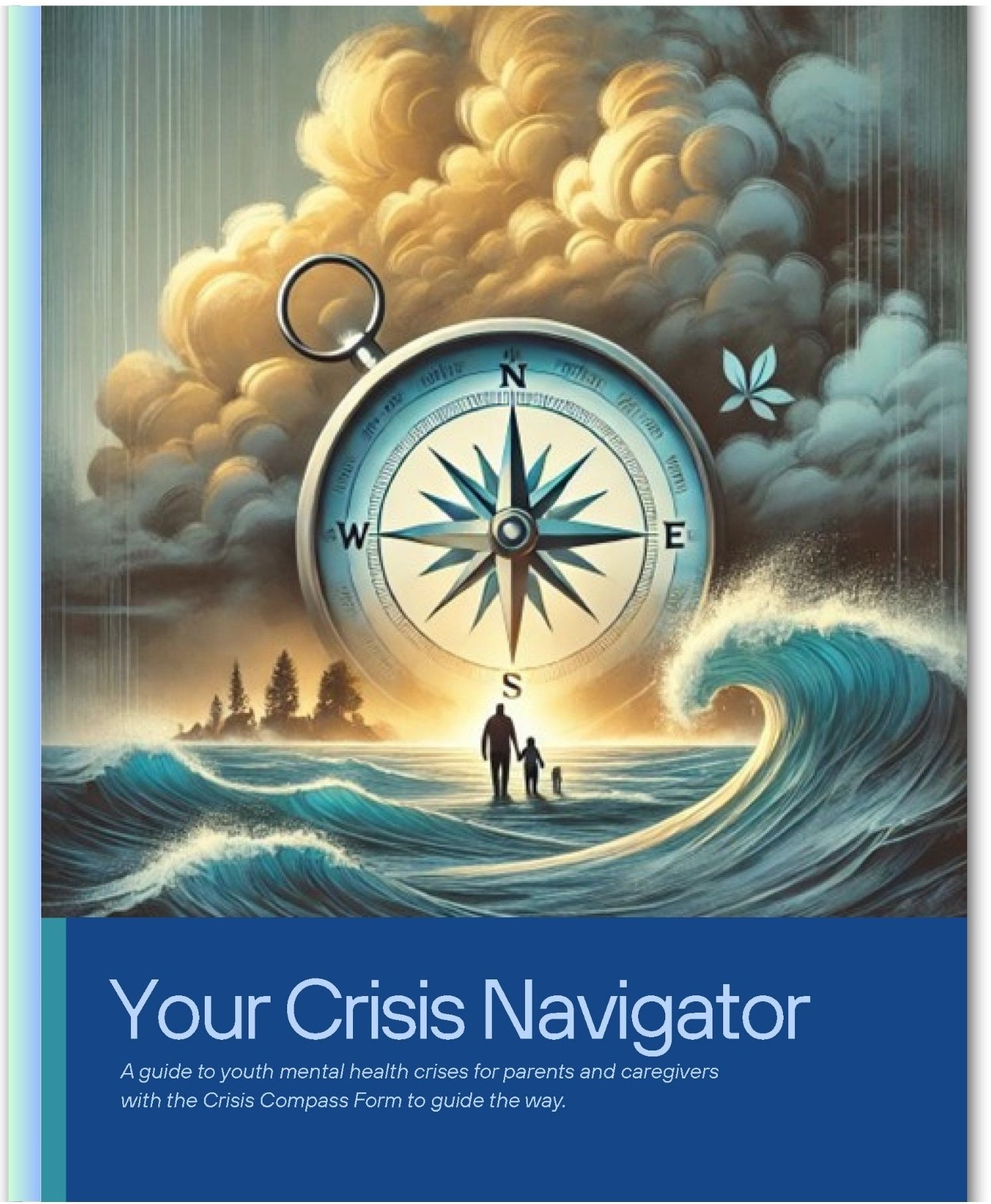
Crisis Navigator Guide
A practical guide to help families understand warning signs, crisis response, recovery, and available supports.
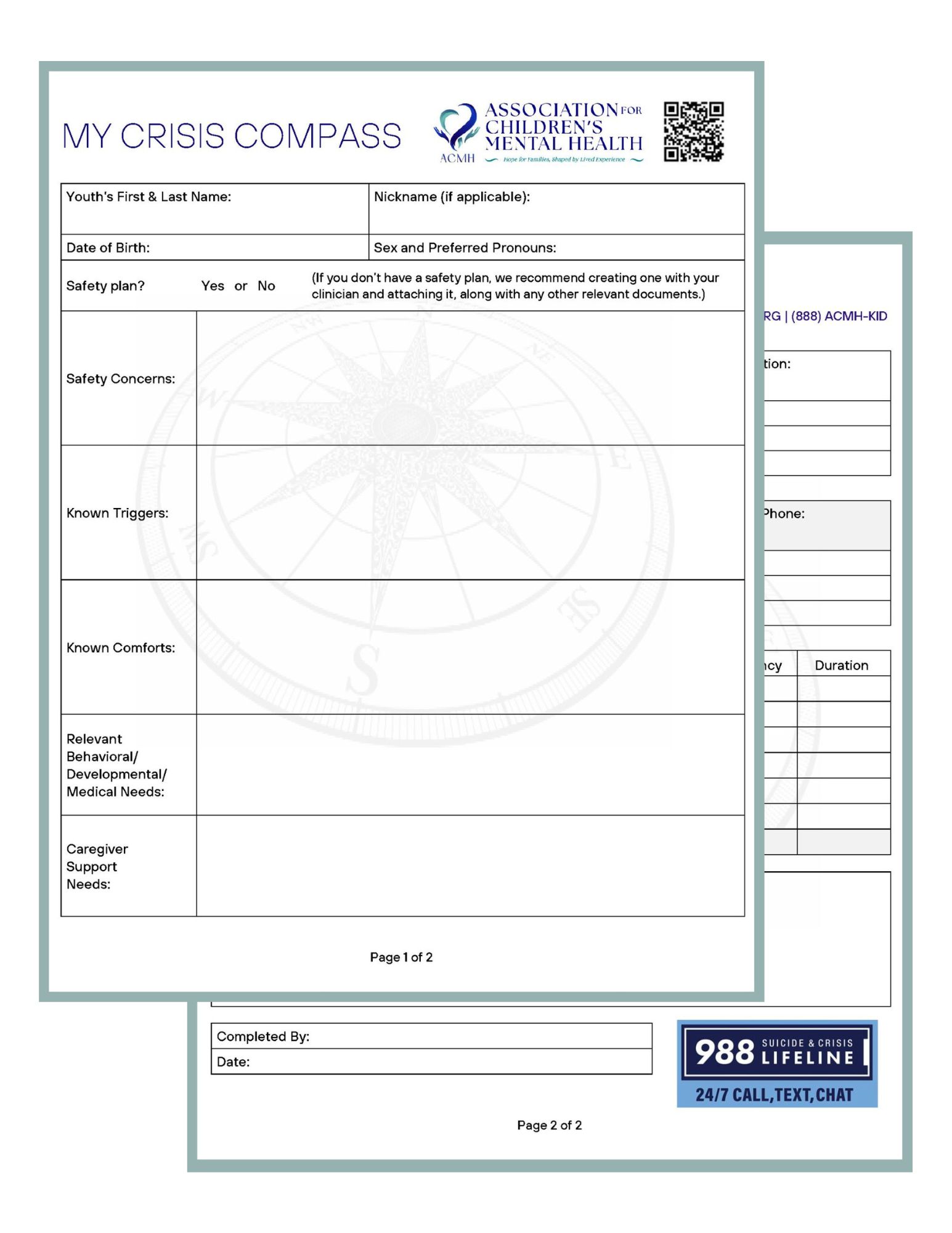
Crisis Compass Form
A fillable form to organize key information that may help responders, providers, and caregivers during a crisis.
Download the Crisis Navigator Tools
Choose the version that works best for you. All tools are free to download.
Crisis Navigator – Quick Reference Guide
A shorter, printable version for everyday use. Includes key guidance,
a completed example, and a blank tear-off Crisis Compass Form.
Crisis Navigator – Full Printable Guide
The complete guide with in-depth information, plus the Crisis Compass Form.
Crisis Compass Form (Fillable)
A standalone fillable PDF to complete digitally, save, or print as needed.
💡 Tip: Many families start with the Quick Reference Guide and keep a completed Crisis Compass Form on hand.
About These Tools
The Crisis Navigator Guide and Crisis Compass Form
are designed to work together. The guide offers practical, trauma-informed information
and the form helps you organize important details that may be helpful during a crisis.
Understand the Crisis Navigator Guide
Learn more about what a mental health crisis can look like, how to recognize
warning signs, what to do during a crisis, and how to navigate available supports.
Use the Crisis Compass Form
Record key information such as diagnoses, medications, allergies, triggers,
calming supports, past crisis responses, and emergency contacts.
Use Them Together
Review the guide ahead of time, complete the form during a calm moment,
and keep it accessible for appointments, school meetings, or emergency situations.
Support Before, During, and After a Crisis
Mental health challenges don’t happen all at once. Understanding what to do before, during, and after a crisis can help you feel more prepared.
Supporting Youth Mental Health at Every Stage
A young person’s mental health can shift over time. Recognizing changes early can help
connect them to the right support. Support matters at every stage,
not just during a crisis.
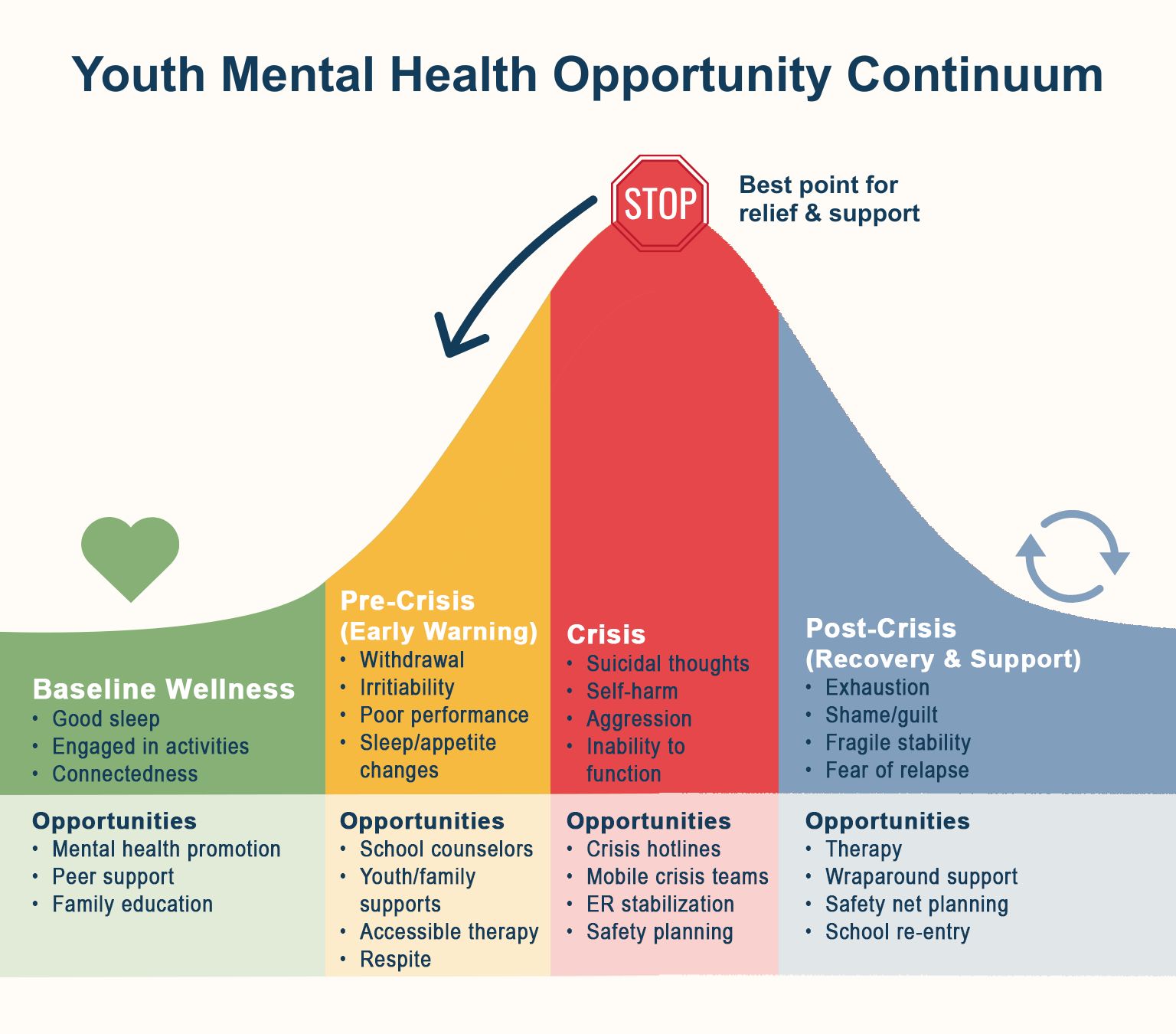
baseline wellness, early warning signs, crisis, and recovery/support.
Explore Support Based on What You Need
Recognizing Warning Signs
Learn common emotional, behavioral, verbal, and daily functioning changes that may signal a young person is struggling.
What to Do During a Crisis
Get simple, supportive guidance for responding in the moment and focusing on safety, support, and next steps.
After a Crisis
Learn what recovery and follow-up support can look like for youth and caregivers after immediate danger has passed.
How to Talk with Your Youth
Find supportive communication strategies for difficult moments, including what to say and what to avoid.
Finding Help & Navigating Supports
Understand where to start, what supports may be available, and how to navigate school, community, and crisis systems.
How to Use the Crisis Compass Form
Get step-by-step guidance for completing the form and using it to support safer, more informed responses.
Quick Help Resources
24/7 Crisis Support
- 988 Suicide & Crisis Lifeline (call/text)
- Crisis Text Line: text HOME to 741741
- Trevor Project (LGBTQ+ youth): call 1-866-488-7386 or text START to 678678
Michigan-Specific Crisis Support
- MiCAL (Michigan Crisis & Access Line): mical.michigan.gov
- MPCIP Crisis Resource Directory: mpcip.org/crisis-directory
- ACMH Parent Line: (888) ACMH-KID (226-4543) | [email protected]
Helpful Communication Reminders
- Try: “I’m here with you.”
- Try: “Can you tell me more about what’s going on?”
- Avoid: “You’ll get over it.”
- Avoid: “You’re doing this for attention.”
Need Help or Have Questions?
If you have questions about using the Crisis Navigator or Crisis Compass Form,
or need help finding support, our team is here.
Feedback, Questions, or Updates
Have feedback on the Crisis Navigator Guide or Crisis Compass Form?
Want to share ideas, ask questions, or receive updates when resources change?
We gratefully acknowledge the many parents, caregivers, first responders,
law enforcement officers, medical professionals, and mental health advocates who shared their insights and experiences to help shape this guide.
Your contributions help ensure that families and communities have the knowledge and resources needed to respond to a crisis with care and understanding.